Nepal has long been the ultimate dream destination for adventure seekers and budget travelers alike. Nestled between the mighty plains of India and the vast Tibetan plateau, this small Himalayan nation packs an extraordinary diversity of landscapes, cultures, and experiences into its compact borders. From the world's highest peaks to lush subtropical jungles, from ancient temples to vibrant street markets, Nepal offers an unparalleled travel experience that doesn't require a fortune to enjoy. In this comprehensive guide, we'll walk you through everything you need to know about budget travel and trekking in Nepal in 2026, helping you plan an unforgettable adventure without emptying your wallet.
- Why Nepal is Perfect for Budget Travelers
- Understanding the Real Costs of Trekking in Nepal
- Top Budget-Friendly Treks in Nepal
- Best Seasons and Weather Considerations
- Planning Your Budget Trek: A Step-by-Step Guide
- What to Pack for Budget Trekking
- Food and Accommodation on a Budget
- Permits, Guides, and Insurance
- Getting Around Nepal Cheaply
- Responsible Budget Travel in Nepal
- Frequently Asked Questions
Why Nepal is Perfect for Budget Travelers
Nepal consistently ranks among the world's most affordable travel destinations, and for good reason. The country's tourism infrastructure has been carefully developed to accommodate travelers at every budget level, from backpackers surviving on dal bhat for a dollar a meal to luxury expedition climbers. The key to Nepal's budget-friendly appeal lies in its teahouse trekking system — a network of family-run lodges along popular trekking routes that provide affordable accommodation, hearty meals, and warm hospitality.
Unlike trekking destinations in other parts of the world that require expensive camping equipment and guided expeditions, Nepal's well-established teahouse trails mean you can trek with just a daypack while your heavier gear is carried by local porters. This dramatically reduces costs and allows independent travelers to explore some of the world's most spectacular mountain scenery without the premium price tag. The culture of adventure tourism in nepal has evolved to become remarkably accessible, with infrastructure that supports both independent travelers and those who prefer organized tours.
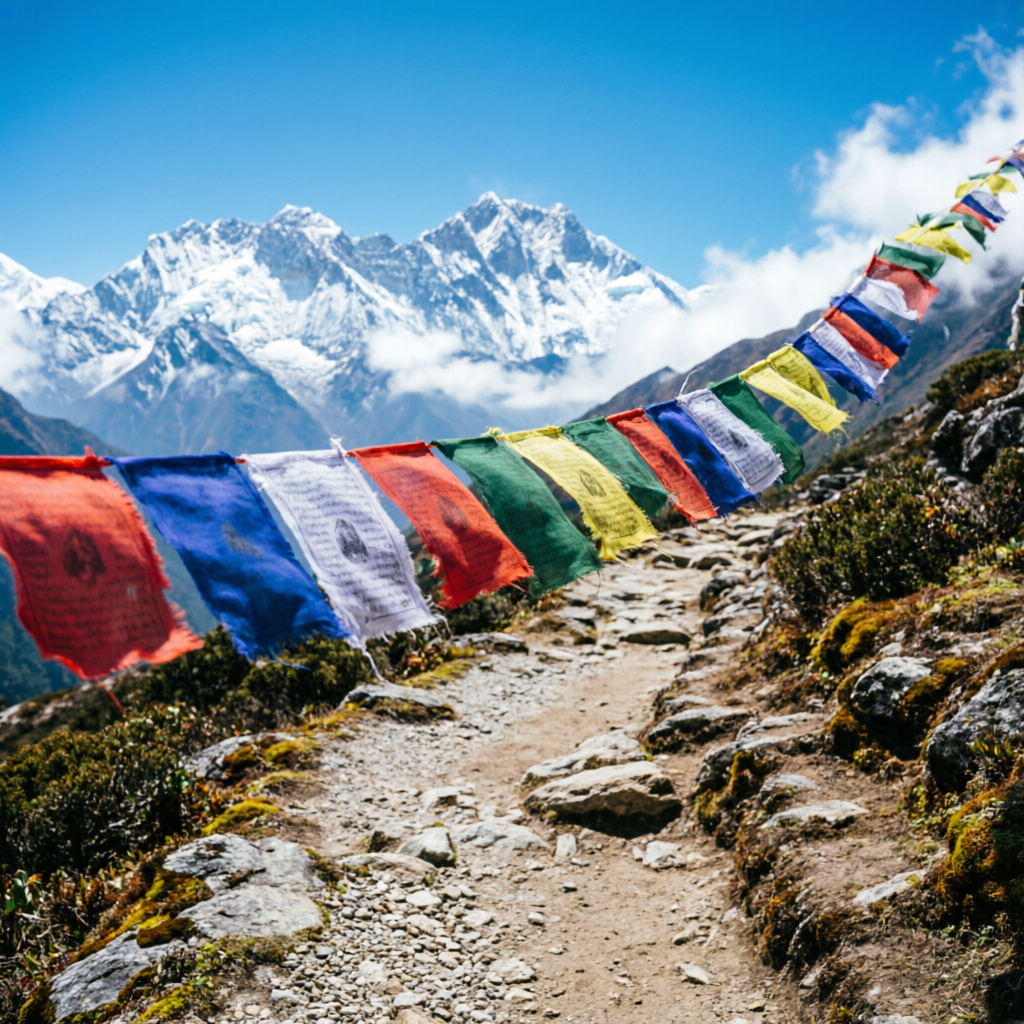
Prayer flags line the trails throughout Nepal's trekking regions, adding color and spiritual significance to the journey.
Moreover, Nepal's affordability extends far beyond trekking. Daily expenses in Kathmandu and Pokhara — the country's two main tourist hubs — are remarkably low. A comfortable hostel dorm bed costs as little as $4-8 per night, a filling plate of dal bhat (rice, lentils, and vegetables) runs $1.50-3, and local bus transportation between major cities costs just a few dollars. Even adventure activities like paragliding in Pokhara, jungle safaris in Chitwan, and white-water rafting on the Trishuli River are significantly cheaper than comparable experiences elsewhere in the world.
Understanding the Real Costs of Trekking in Nepal
One of the most common questions budget travelers ask is: "How much does it actually cost to trek in Nepal?" The answer depends on several factors, including the trekking region, your travel style, the duration of your trip, and whether you're traveling independently or with a guide. Here's a realistic breakdown of costs for budget trekking in Nepal in 2026:
| Expense Category | Budget Range (USD) | Notes |
|---|---|---|
| Daily Food & Accommodation | $10 - $25/day | Teahouse stays with 3 meals |
| Trekking Permits | $30 - $100 | One-time fee per trek region |
| TIMs Card | $10 - $20 | Trekker's Information Management |
| Guide (optional) | $25 - $35/day | Includes guide's food & lodging |
| Porter (optional) | $15 - $25/day | Carries up to 20kg of gear |
| Domestic Flights | $150 - $200 | Kathmandu to Lukla one-way |
| Travel Insurance | $50 - $150 | Essential for altitude coverage |
| Local Transport | $5 - $30 | Bus from Kathmandu to trek start |
💡 Pro Tip: Save on Flights
If budget is a primary concern, consider treks that start with a bus journey rather than a flight. The Annapurna region, Langtang Valley, and Mardi Himal can all be reached by affordable local buses from Kathmandu or Pokhara, saving you $150-400 on domestic flights.
For a typical 10-12 day budget trek, independent travelers can expect to spend between $300 and $600 total, excluding international flights. This makes Nepal one of the most affordable trekking destinations in the world — comparable experiences in Switzerland, New Zealand, or Patagonia would cost three to five times as much.
Top Budget-Friendly Treks in Nepal
Nepal offers dozens of world-class trekking routes, each with its own unique character, difficulty level, and cost profile. Here are some of the best budget-friendly treks that deliver maximum adventure without the premium price tag:
Langtang Valley Trek
The Langtang valley trek is one of the most accessible and affordable treks in Nepal. Located just north of Kathmandu, it requires no domestic flight, making it significantly cheaper than Everest region treks. The valley offers stunning views of Langtang Lirung (7,227m), diverse forests, Tamang culture, and the poignant rebuilt villages following the 2015 earthquake. Budget travelers can complete this trek for as little as $200-400, including all permits, food, and accommodation.
Manaslu Circuit Trek
The Manaslu Circuit trek circles the eighth-highest mountain in the world and offers a more remote, less crowded alternative to the Annapurna and Everest circuits. While it requires a special restricted area permit (which adds to the cost), the trek is still very affordable compared to international standards. The route passes through diverse landscapes, from subtropical forests to high alpine terrain, and crosses the challenging Larkya La Pass at 5,160m.
Mardi Himal Trek
For budget travelers short on time or money, the Mardi Himal Trek is an excellent choice. This relatively new trekking route offers spectacular close-up views of Machhapuchhre (Fishtail Mountain) and the Annapurna range without the crowds of more popular trails. At just 5-7 days, it's one of the shortest treks that still delivers a genuine high-altitude Himalayan experience, and costs can be kept under $300 for the entire trip.
Everest Base Camp Trek
The iconic Everest Base camp trek remains the most famous trekking route in the world, and while it's pricier than other options (primarily due to the Lukla flight), it's still remarkably affordable. The route passes through Sherpa villages, ancient monasteries, and the stunning Sagarmatha National Park. With careful budgeting, independent trekkers can complete EBC for $500-900, a fraction of what guided expeditions charge.
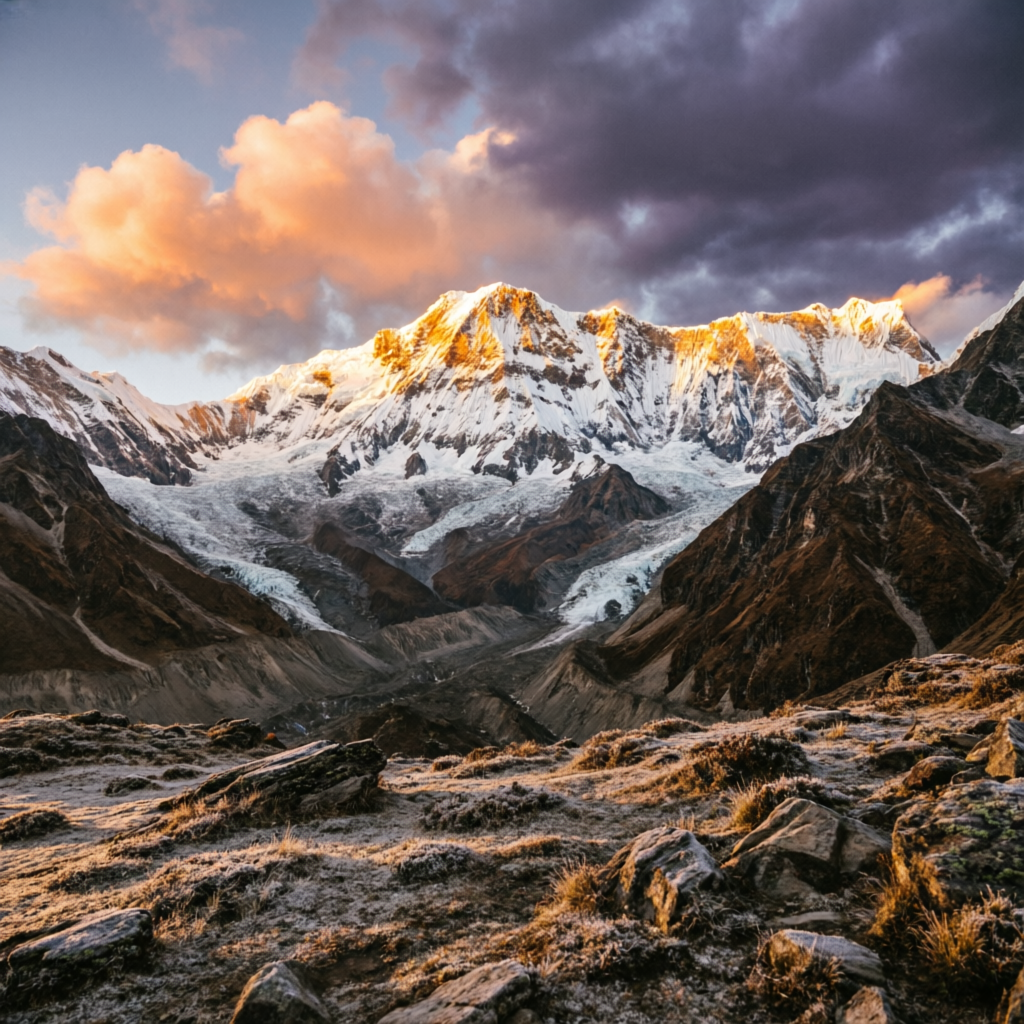
The golden light of sunrise on Himalayan peaks is one of the most rewarding experiences for budget trekkers in Nepal.
Best Seasons and Weather Considerations
Timing your trek correctly is one of the most important factors for both safety and cost. Nepal has four distinct seasons, each offering different trekking conditions. Understanding the Nepal Trekking Seasons and Weather patterns will help you choose the best time for your budget adventure and avoid expensive cancellations or gear failures.
Spring (March – May)
Spring is widely considered one of the best seasons for trekking in Nepal. The weather is warm and stable, rhododendron forests burst into spectacular bloom, and the mountain views are generally excellent. Temperatures at lower elevations range from 15-25°C, while at higher altitudes they can drop to -5 to 5°C at night. This is peak season, so teahouses can be busier, but the conditions are ideal for almost all treks.
Autumn (September – November)
Autumn is arguably the premier trekking season in Nepal. The monsoon rains have cleared the atmosphere, offering crystal-clear mountain views. The weather is cool and dry, with excellent visibility and comfortable daytime temperatures. This is also the busiest season, so if you're looking for solitude, consider the shoulder months of late September or late November.
Winter (December – February)
Winter trekking in Nepal is possible and offers significant cost advantages — fewer tourists mean lower prices and more availability at teahouses. However, higher altitude treks become extremely cold, with temperatures dropping well below freezing, and some high passes may be closed due to snow. Lower altitude treks like the Ghorepani Poon Hill Trek remain very accessible and enjoyable during winter months.
Monsoon (June – August)
The monsoon season brings heavy rainfall, making many trails muddy, slippery, and potentially dangerous. Leeches are common, and mountain views are frequently obscured by clouds. However, this is the cheapest time to visit Nepal, and treks in the rain-shadow regions of Upper Mustang and Dolpo remain excellent options during monsoon months.
⚠️ Altitude Sickness Warning
Regardless of the season, always allow proper acclimatization time. Altitude sickness can affect anyone, regardless of fitness level. Ascend gradually, stay hydrated, and never ignore symptoms like persistent headaches, nausea, or dizziness. Consider carrying Diamox as a preventive measure.
Planning Your Budget Trek: A Step-by-Step Guide
Planning a budget trek in Nepal doesn't have to be overwhelming. Follow these steps to organize your adventure efficiently and cost-effectively:
- Choose Your Trek: Research different routes based on your fitness level, available time, budget, and interests. Shorter treks like Mardi Himal (5-7 days) are ideal for beginners or those on tight budgets, while longer circuits like Manaslu (14-18 days) offer a more comprehensive experience.
- Book Flights Early: International flights to Kathmandu are typically your largest expense. Book 2-3 months in advance for the best deals, and consider flying mid-week when fares are often lower. Airlines like Qatar Airways, Emirates, and Turkish Airlines frequently offer competitive rates.
- Arrange Permits: Most treks require a TIMs card and at least one area-specific permit. You can obtain these in Kathmandu at the Nepal Tourism Board office or through your trekking agency. Bring passport-sized photos and copies of your passport.
- Purchase Gear Locally or Bring Essentials: Kathmandu's Thamel district is famous for affordable trekking gear. You can buy or rent jackets, sleeping bags, trekking poles, and boots at a fraction of Western prices. However, bring quality trekking shoes from home — your feet will thank you.
- Get Travel Insurance: This is non-negotiable. Ensure your policy covers trekking up to the maximum altitude of your route, emergency helicopter evacuation, and medical expenses. Several reputable companies offer specialized adventure travel insurance at reasonable rates.
- Decide on Guide/Porter: While independent trekking is possible on many routes, hiring a guide enhances safety, supports the local economy, and enriches your cultural experience. Many budget-conscious travelers hire guides only, carrying their own packs to save on porter costs.
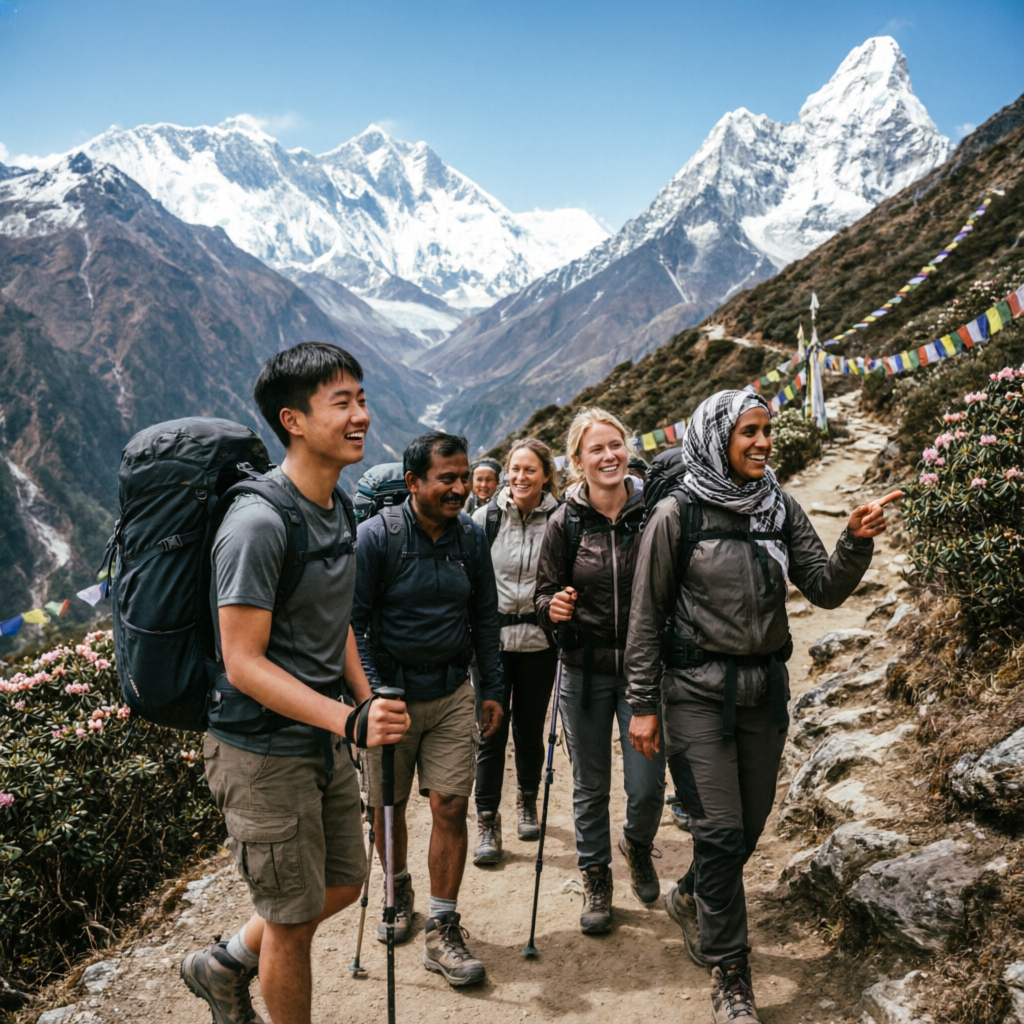
Budget trekking in Nepal is a social experience — you'll meet fellow travelers from around the world on the trails.
What to Pack for Budget Trekking
Packing smart is essential for budget trekking. You want to carry everything you need without paying extra for excess baggage on domestic flights or overburdening yourself on the trail. Here's a practical packing list for budget trekkers:
Essential Gear
- Daypack (30-40L): For carrying daily essentials — water, snacks, camera, layers
- Duffel bag (60-80L): If using a porter, this holds your main gear
- Sleeping bag (-10°C rating): Teahouses provide blankets, but a good sleeping bag is essential
- Trekking poles: Invaluable for steep descents; can be bought cheaply in Thamel
- Water purification: Tablets or a filter bottle to avoid buying expensive bottled water
Clothing
- Moisture-wicking base layers (merino wool recommended)
- Fleece mid-layer for warmth
- Down or synthetic insulated jacket
- Waterproof/windproof shell jacket and pants
- Trekking pants (convertible zip-off style is versatile)
- Warm hat, gloves, and buff/scarf
- Several pairs of trekking socks
- Camp shoes or sandals for evenings
Personal Items
- Sunscreen (SPF 50+) and lip balm with SPF
- Sunglasses with UV protection (essential at altitude)
- Basic first aid kit with blister treatment
- Headlamp with extra batteries
- Quick-dry towel
- Reusable water bottle or hydration system
- Snacks (energy bars, nuts, chocolate from Kathmandu)
💡 Money-Saving Packing Tip
Instead of buying a new down jacket for $200+, visit the gear shops in Kathmandu's Thamel district. You'll find high-quality copies of major brands for $30-60 that work perfectly well for trekking conditions. The same applies to fleece jackets, trekking pants, and accessories.
Food and Accommodation on a Budget
One of the greatest joys of trekking in Nepal is the food. Teahouses serve a surprising variety of dishes, and the staple meal — dal bhat — is not only delicious and filling but also the most economical option available. Here's what you need to know about eating and sleeping on a budget:
Food Costs and Options
Teahouse menus typically include dal bhat (rice, lentils, vegetables, and sometimes meat), noodles (thukpa, chow mein), pasta, pancakes, porridge, soups, and various snacks. Prices increase with altitude — a plate of dal bhat might cost $3 at 2,000m but $7 at 4,000m, reflecting the cost of transporting food up the mountain. Budget tip: dal bhat is usually unlimited, meaning you can ask for free refills. It's the most filling and cost-effective meal on the trail.
Accommodation Costs
Teahouse accommodation is remarkably affordable, typically ranging from $2-5 per night for a basic twin-share room. In lower altitudes and more popular areas, you might even find rooms for $1-2. As altitude increases, so do prices, but even at Everest Base Camp (5,364m), a basic room rarely exceeds $8-10. The rooms are simple — usually just a bed with a mattress, pillow, and blanket — but they provide essential shelter and warmth.
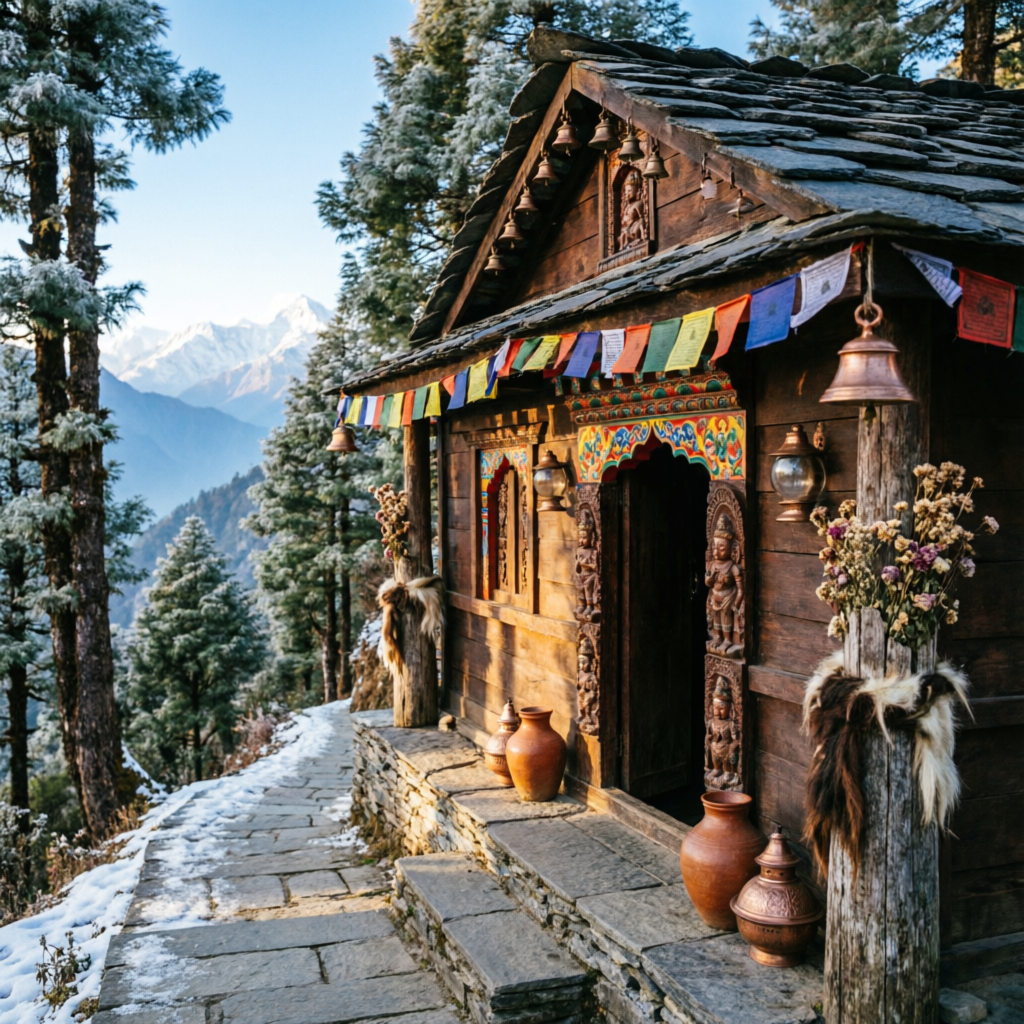
Traditional teahouses offer affordable accommodation and warm hospitality throughout Nepal's trekking regions.
Budget Food Tips
- Eat dal bhat — it's the best value and gives you unlimited refills
- Buy snacks in Kathmandu before heading to the mountains (prices are 2-3x higher on the trail)
- Use water purification tablets instead of buying bottled water ($1-3 per bottle on trail)
- Try local specialties like momos (dumplings) and sel roti (sweet bread) for authentic, affordable meals
- Avoid meat at higher altitudes — it's often been carried for days and may not be fresh
Permits, Guides, and Insurance
Understanding the permit and guide requirements is crucial for planning your budget trek. Nepal's permit system has evolved in recent years, and requirements vary by region.
Permit Requirements
Most treks require a TIMs (Trekkers' Information Management System) card, which costs approximately $10 for independent trekkers and $20 for those with a guide. Additionally, specific regions require area-specific permits:
- Annapurna Conservation Area Permit (ACAP): ~$30
- Sagarmatha National Park Permit: ~$30 (Everest region)
- Langtang National Park Permit: ~$30
- Manaslu Restricted Area Permit: ~$70-100 (varies by season)
Do You Need a Guide?
As of recent regulations, some trekking regions in Nepal now require trekkers to be accompanied by a licensed guide. This is particularly true for popular routes like Everest Base Camp and the Annapurna Circuit. While this adds to the cost, a good guide provides invaluable safety support, cultural insights, and logistical assistance. For budget-conscious travelers, consider hiring a guide-only package without porter service — this typically costs $25-35 per day and covers the guide's food and accommodation.
When choosing a guide or agency, do your research. Nepal Intrepid Treks is widely regarded as the best trekking agency in nepal, offering competitive prices, experienced guides, and a strong commitment to sustainable tourism practices. They provide various budget-friendly packages that include permits, guides, and airport transfers without the premium markup of international operators.
Travel Insurance
Never trek in Nepal without comprehensive travel insurance. Your policy must cover trekking at altitude (check the maximum elevation), emergency helicopter evacuation, and medical treatment. Companies like World Nomads, SafetyWing, and Heymondo offer specialized adventure travel insurance starting from around $50 for a two-week trip. The cost of helicopter evacuation without insurance can exceed $5,000, making insurance an essential investment.
Getting Around Nepal Cheaply
Transportation in Nepal is remarkably affordable if you know how to navigate the system. Here are the best budget-friendly options:
Local Buses
Local buses are the cheapest way to travel between cities and trek starting points. A bus from Kathmandu to Pokhara costs $5-10 and takes 6-8 hours. Kathmandu to Chitwan is $5-8, and Kathmandu to the Langtang trailhead is $6-12. These buses are basic but functional, and they offer a genuine glimpse into daily Nepali life.
Tourist Buses
For a slightly more comfortable experience, tourist buses cost $10-20 and offer better seats, fewer stops, and sometimes included snacks. They're a good middle-ground option for budget travelers who want a bit more comfort without the price of private transport.
Domestic Flights
The most expensive transport option in Nepal, domestic flights are unavoidable for some treks (like Everest Base Camp, which requires flying to Lukla). A one-way Kathmandu-Lukla flight costs $180-200. To save money, book flights as part of a trekking package rather than separately, as agencies often get discounted rates.
Responsible Budget Travel in Nepal
Traveling on a budget doesn't mean compromising on responsible tourism practices. In fact, budget travelers can have a profoundly positive impact on Nepal's communities and environment by making conscious choices:
- Support local businesses: Stay in family-run teahouses, eat at local restaurants, and hire local guides. Your tourism dollars directly benefit Nepali families.
- Minimize plastic waste: Carry reusable water bottles with purification systems. Avoid buying plastic water bottles on the trail — they contribute to Nepal's growing waste problem.
- Respect local culture: Dress modestly, ask permission before photographing people, and follow local customs around temples and monasteries.
- Stay on marked trails: This protects fragile alpine ecosystems and prevents erosion.
- Tip appropriately: Guides and porters rely on tips as part of their income. A typical tip is $5-10 per day for guides and $3-5 per day for porters.
- Learn a few Nepali phrases: Simple greetings like "Namaste" (hello) and "Dhanyabad" (thank you) go a long way in building connections with local people.
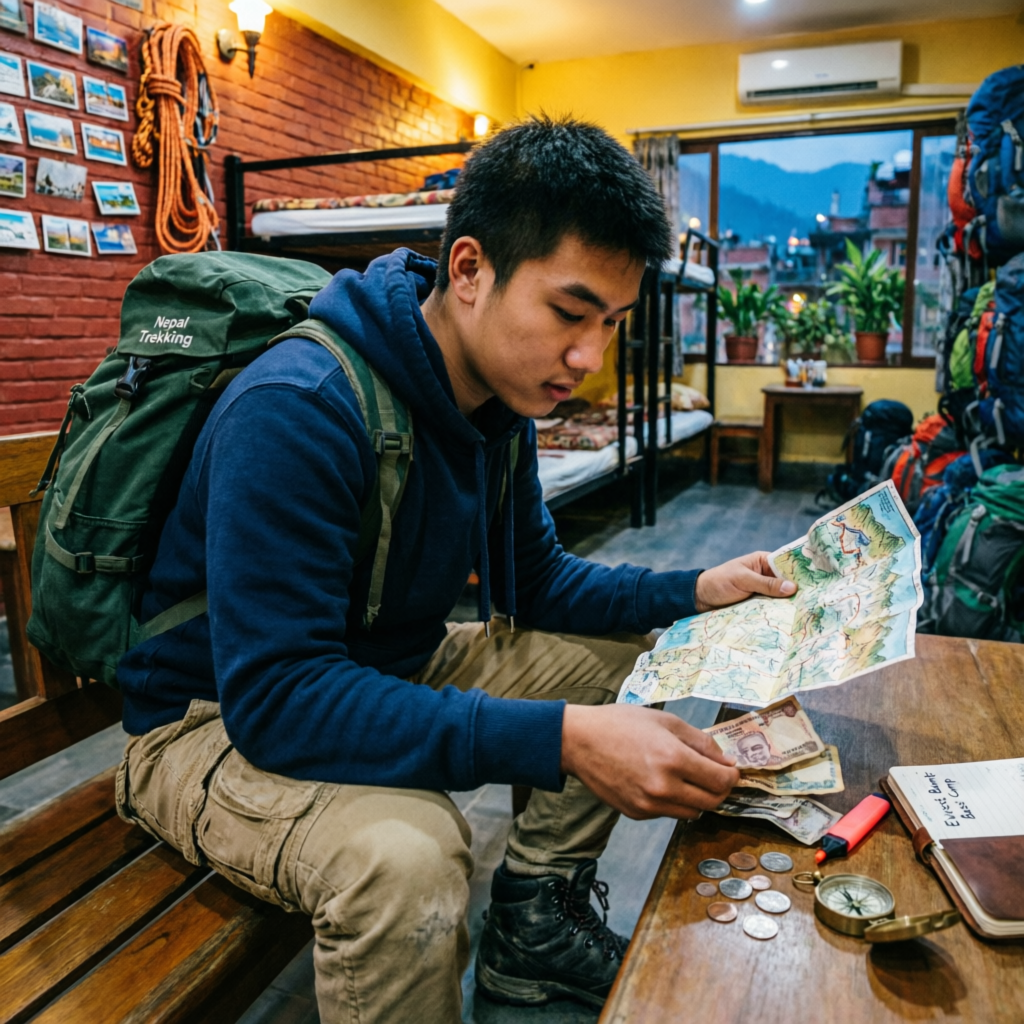
Planning your Nepal trekking budget before hitting the trail ensures a smooth and stress-free adventure.
Frequently Asked Questions
Budget trekking in Nepal typically costs between $15 to $30 per day, covering food, accommodation, and permits. Independent trekkers can manage on even less by staying in local teahouses and eating simple meals like dal bhat. The total cost for a 10-day trek ranges from $300-600, excluding international flights and optional guide/porter services.
The best seasons for budget trekking in Nepal are spring (March to May) and autumn (September to November). These periods offer clear skies, moderate temperatures, and the most stable trail conditions. Winter (December to February) is the cheapest time with fewer crowds, but higher altitudes become very cold. Monsoon season (June to August) is best avoided except for rain-shadow region treks like Upper Mustang.
Recent regulations require guides on several popular trekking routes, including Everest Base Camp. While some less-regulated treks can still be done independently, hiring a guide is highly recommended for safety, navigation, and cultural enrichment. Budget-friendly guide-only packages (without porter) cost approximately $25-35 per day.
Yes, Nepal is generally very safe for budget travelers. The teahouse trekking system is well-established, trails are well-marked, and local people are famously hospitable. Key safety considerations include altitude sickness prevention, having proper travel insurance, checking weather forecasts, and informing someone of your itinerary. Nepal has a low crime rate against tourists, and the trekking community is supportive and welcoming.
The Mardi Himal Trek (5-7 days, $150-300) and the Ghorepani Poon Hill Trek (4-5 days, $120-250) are among the cheapest treks in Nepal. Both can be reached by affordable bus transport from Pokhara, require minimal permits, and offer spectacular mountain views. For those on an extremely tight budget, day hikes around Kathmandu Valley are free and offer beautiful scenery and cultural experiences.
Absolutely. Many budget travelers trek independently without porters, carrying their own gear in a 40-60L backpack. This significantly reduces costs and gives you more freedom over your pace and schedule. Just ensure you're physically prepared for the daily ascents and descents with a loaded pack. On well-established routes like Annapurna and Langtang, trekking without a porter is common and perfectly safe.
🏔️ Ready to Start Your Nepal Adventure?
Nepal's mountains are calling. Whether you choose the iconic Everest Base Camp trail, the serene Langtang Valley, or the adventurous Manaslu Circuit, your budget trekking experience in Nepal will be one of the most rewarding journeys of your life. Start planning today — the Himalayas await.